Mutemwa Lodge
The Upper Zambezi River
A legendary African river sustaining ecosystems, cultures and extraordinary wilderness along its banks.
Our Location
Riverside
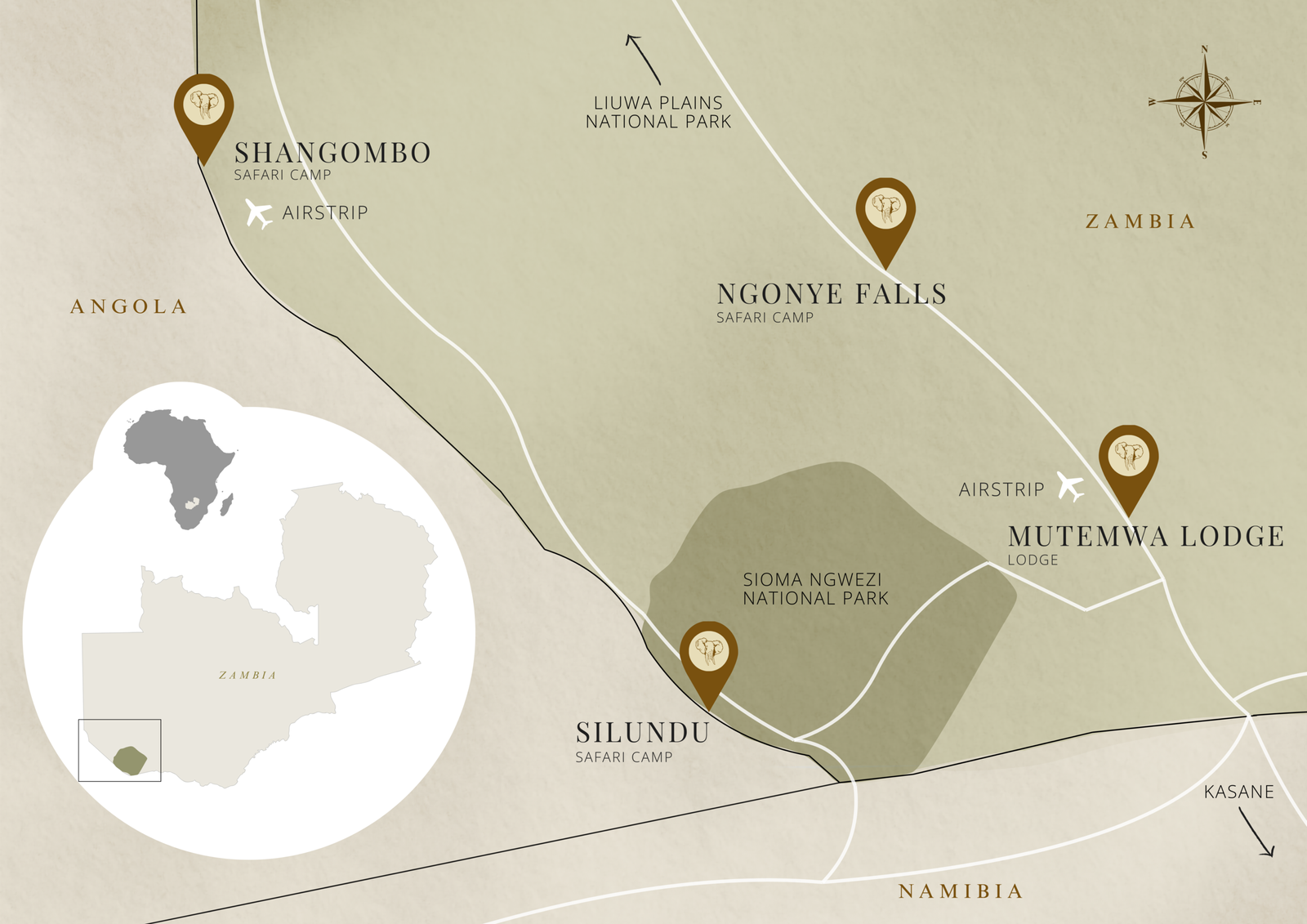
Mutemwa Lodge sits on the Upper Zambezi River in Western Zambia’s Sesheke District, with access to 90km of virtually private river. Guests enjoy this untouched stretch without another boat in sight—perfect for peaceful fishing and river adventures. Our cooler climate sets us apart, especially during the hotter months.
Ways to travel
The 3 best ways to visit Mutemwa
Traveling in Africa can come with its challenges but… it’s all about who you know.
We’ve been doing this for over three decades and have tried and tested the best routes, companies and people to work with.
Let us know how you’d like to arrive and we will organize everything from there to ensure your journey is just as enjoyable as your stay.
Air Charter
The easiest and most comfortable way to reach Mutemwa is by air.
- 45 min flight time from Livingstone International Airport
- Land directly at our local airstrip
- With ice-cold drinks and an afternoon fish waiting.
Road Transfer
Fly into Kasane Airport in Botswana and travel by road to Mutemwa.
- 2.5 – 3 hours (Including border crossings)
- Guaranteed excellent and timely service.
- Travel through the Chobe National Park
Self Drive
If you’re really feeling adventurous, take a drive through some of Africa’s most breathtaking and remote regions.
- Mutemwa has 2×4 access
- Nearby highlights include: Victoria Falls, the Caprivi Strip, Chobe, Ngonye Falls, Sioma Ngwezi and Luiwa National Parks
Discover The Beauty of Barotseland
Continental Location
Our Position In KAZA
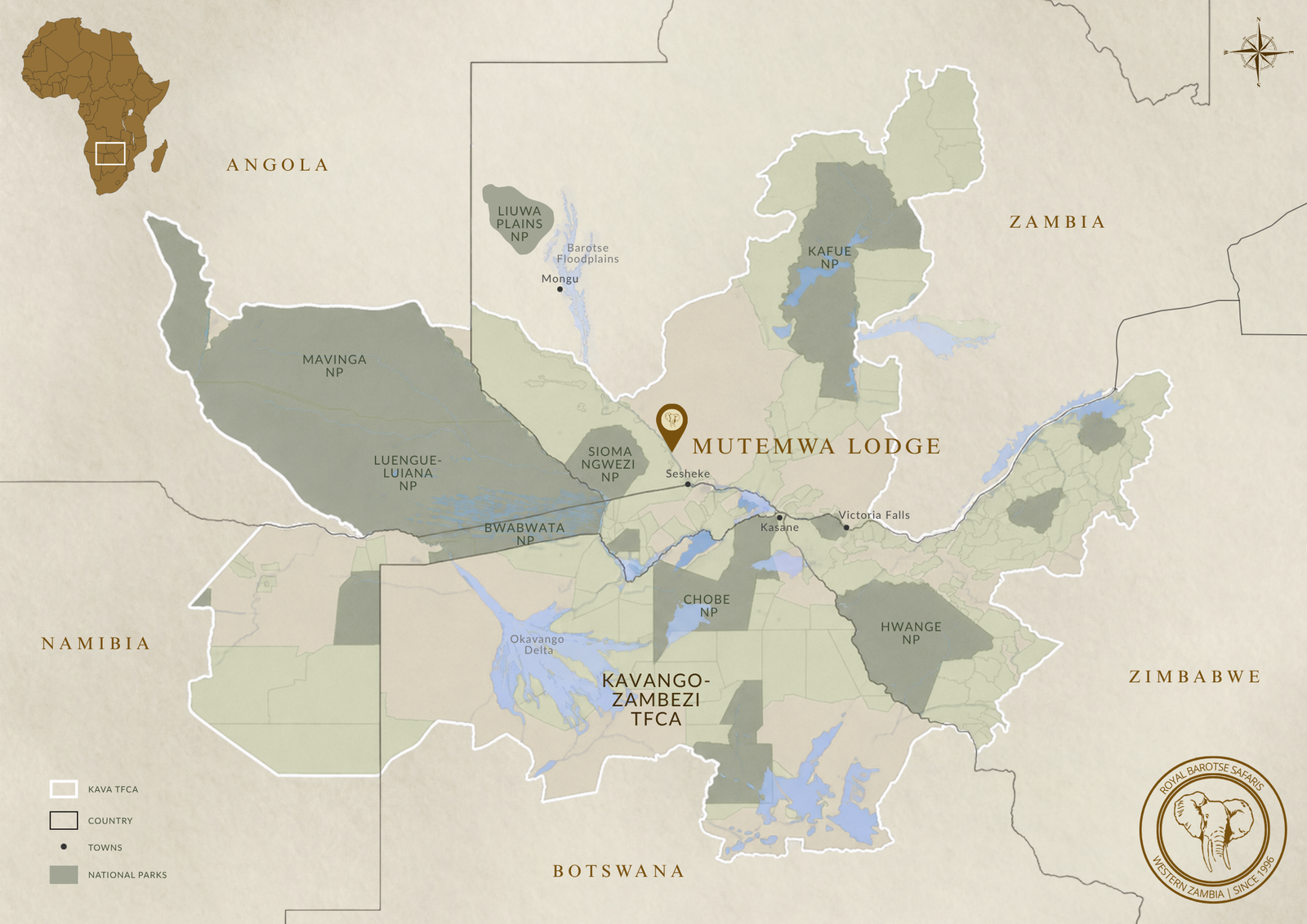
Set on the banks of the Zambezi River opposite Sioma Ngwezi National Park, Mutemwa Lodge lies within the vast Kavango–Zambezi Transfrontier Conservation Area (KAZA TFCA)—the largest conservation landscape in the world. Spanning over 520,000 km² across Zambia, Angola, Namibia, Botswana, and Zimbabwe, KAZA is home to an estimated 220,000 elephants, the largest continuous population on Earth. The vision of KAZA is to create a connected, transboundary wilderness where wildlife can move freely across borders, ecosystems are restored, and tourism plays a vital role in supporting conservation and uplifting local communities.